
Stone 101 · 5 min read
Top 3 Best Italian Marble Varieties: Carrara, Calacatta and Corchia Compared
By Flora Marble team · 15 September 2026
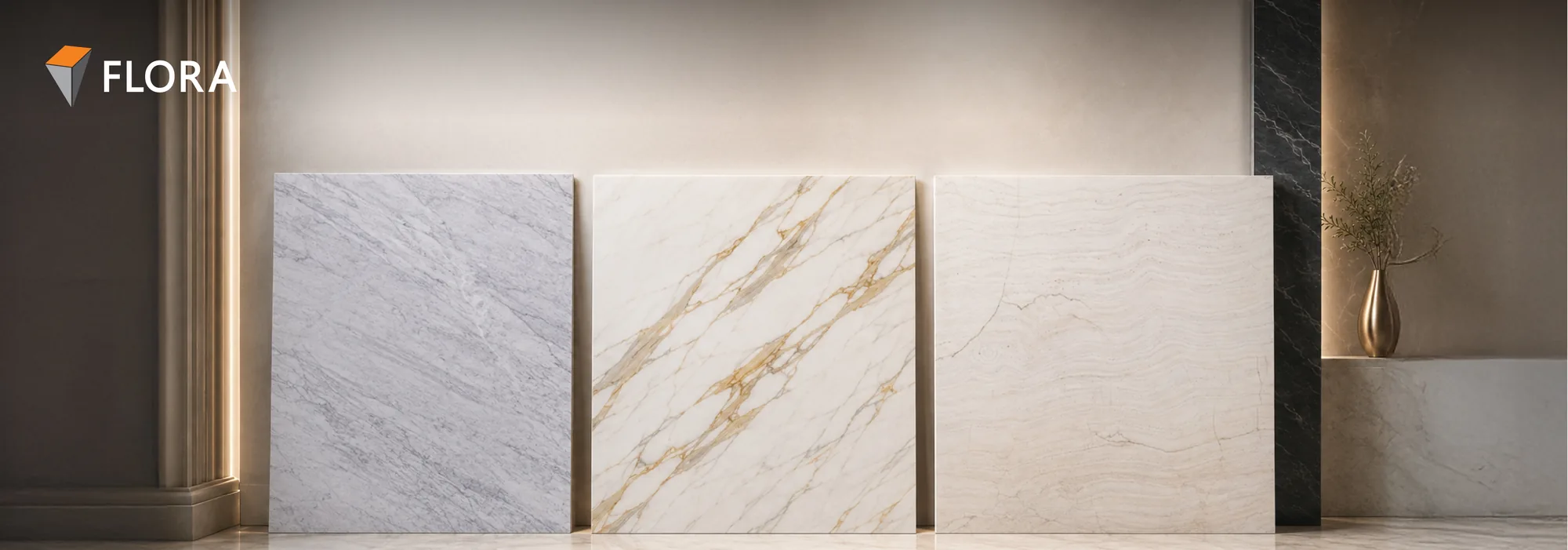
Italian marble turns an ordinary surface into the thing a room is built around. It is entirely natural, so no two slabs are alike: small shifts in colour, veining and movement are exactly why architects and designers keep specifying it.
The range is enormous. Carrara, Calacatta and Corchia are among the most asked for, and they do not suit the same jobs. Here is how to tell them apart and choose between them.
What makes Italian marble different
Italian marble is quarried across several regions, and the geology of each one gives its stone a particular colour, vein and texture. Backgrounds run from cool white and grey through to warm creams. Veining ranges from barely there to fully architectural.
Finish changes the reading as much as the stone does. A polish deepens the colour and returns light; a honed surface softens everything and hides the small marks of daily life. We cover the difference in our guide to stone finishes.
Choosing well means looking past the photograph: the room, the use, the maintenance you will actually do, and the specific slab in front of you all matter more than the name.
1. Carrara: classic, elegant, versatile
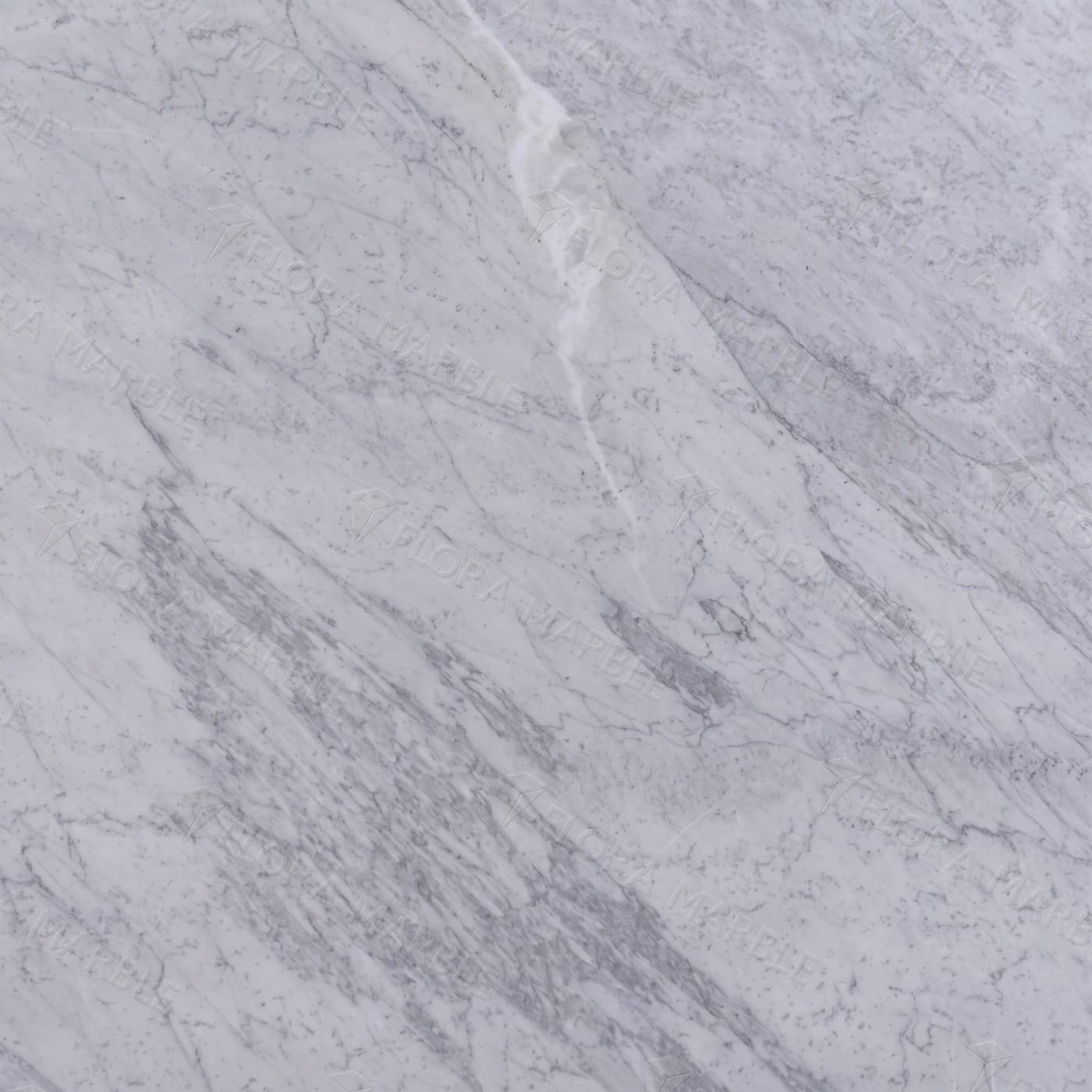
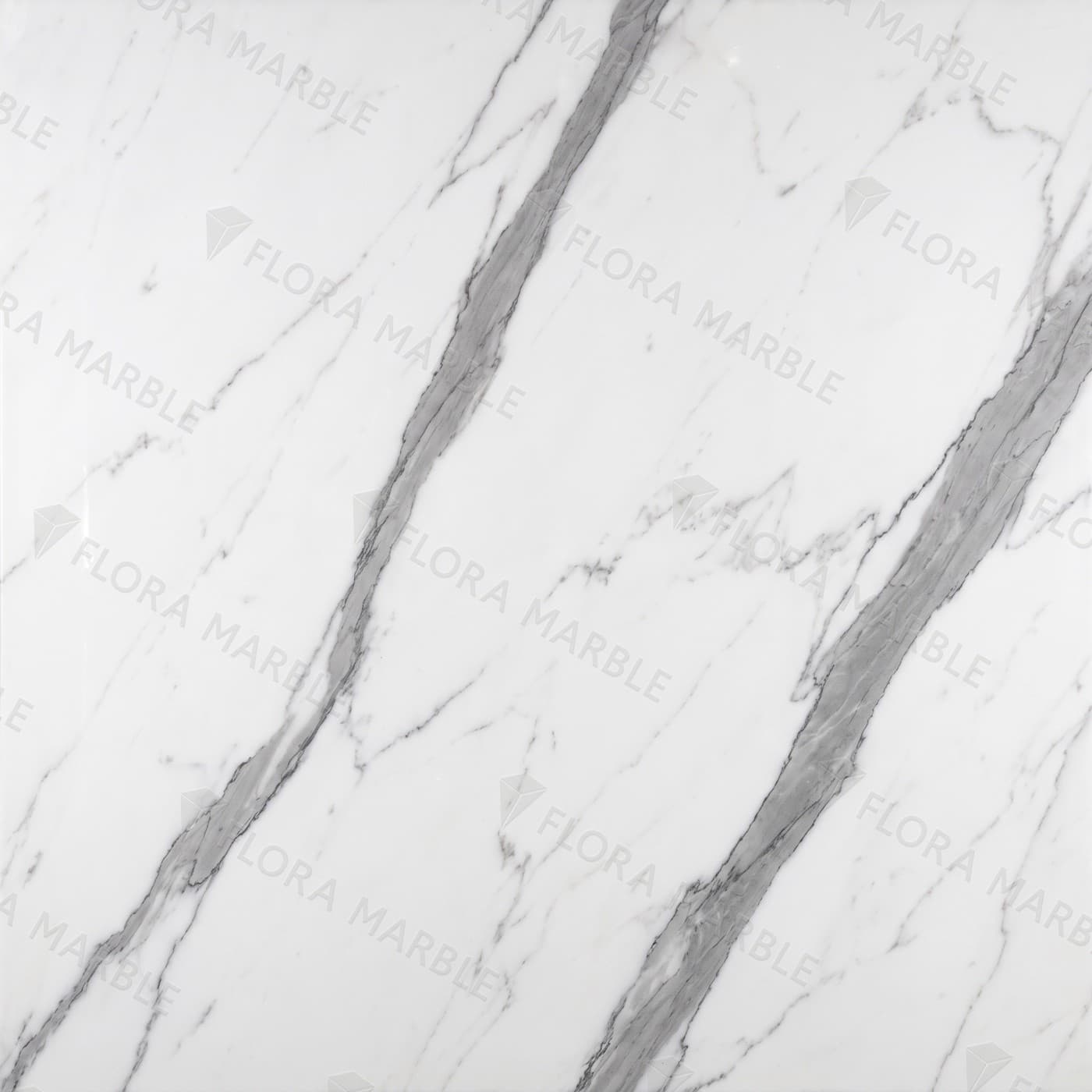
Bianco Carrara C has a white to light-grey background crossed by soft grey veining. It reads as elegant without taking over a room, which is why it survives in both classical and modern interiors. Carrara White is the brighter selection of the same family.
Because the pattern is calm, Carrara is the most versatile of the three. It works across:
- Flooring, where many slabs must read as one surface
- Wall cladding and bathrooms
- Kitchens and staircases
- Feature walls where restraint is wanted
Its neutral palette sits happily beside almost any cabinetry, timber or metal finish. If you want understated luxury that will not date, this is the one.
2. Calacatta: bold veining, statement luxury
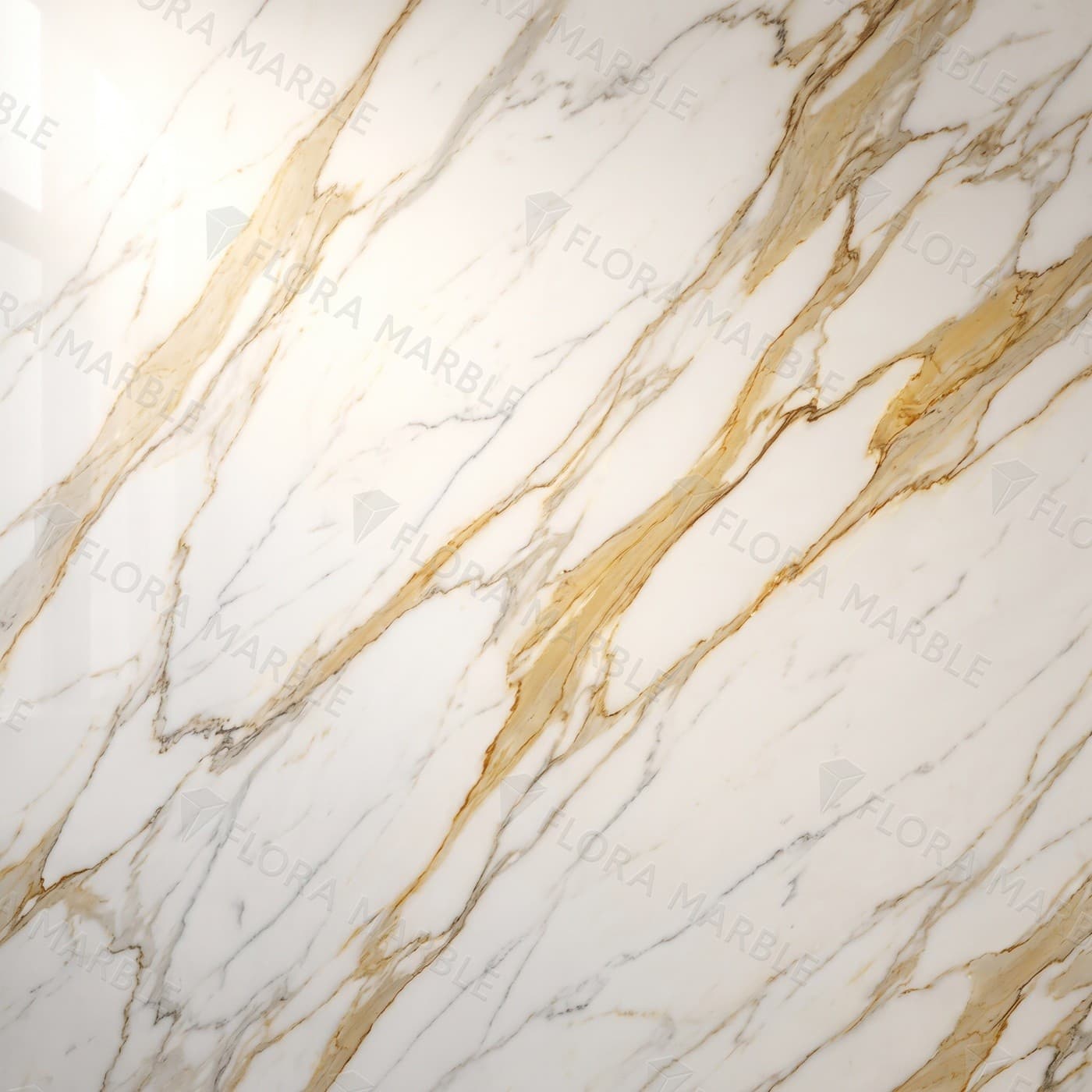
Where Carrara is modest, Calacatta is meant to be noticed. Calacatta Oro pairs a bright, warm-white background with thick, decisive veining in grey and gold. The pattern becomes an architectural element rather than a backdrop.
That makes it the choice where the stone is the point:
- Kitchen islands and statement walls
- Bathroom vanities and full-height shower walls
- Hotel lobbies and hospitality interiors
- Book-matched pairs, where two slabs mirror each other
Large slabs give the movement room to travel, which is why Calacatta rewards being used on one generous surface rather than spread thinly. If you are planning a mirrored wall, read what book-matching actually involves first.
3. Corchia: natural character, quietly distinctive
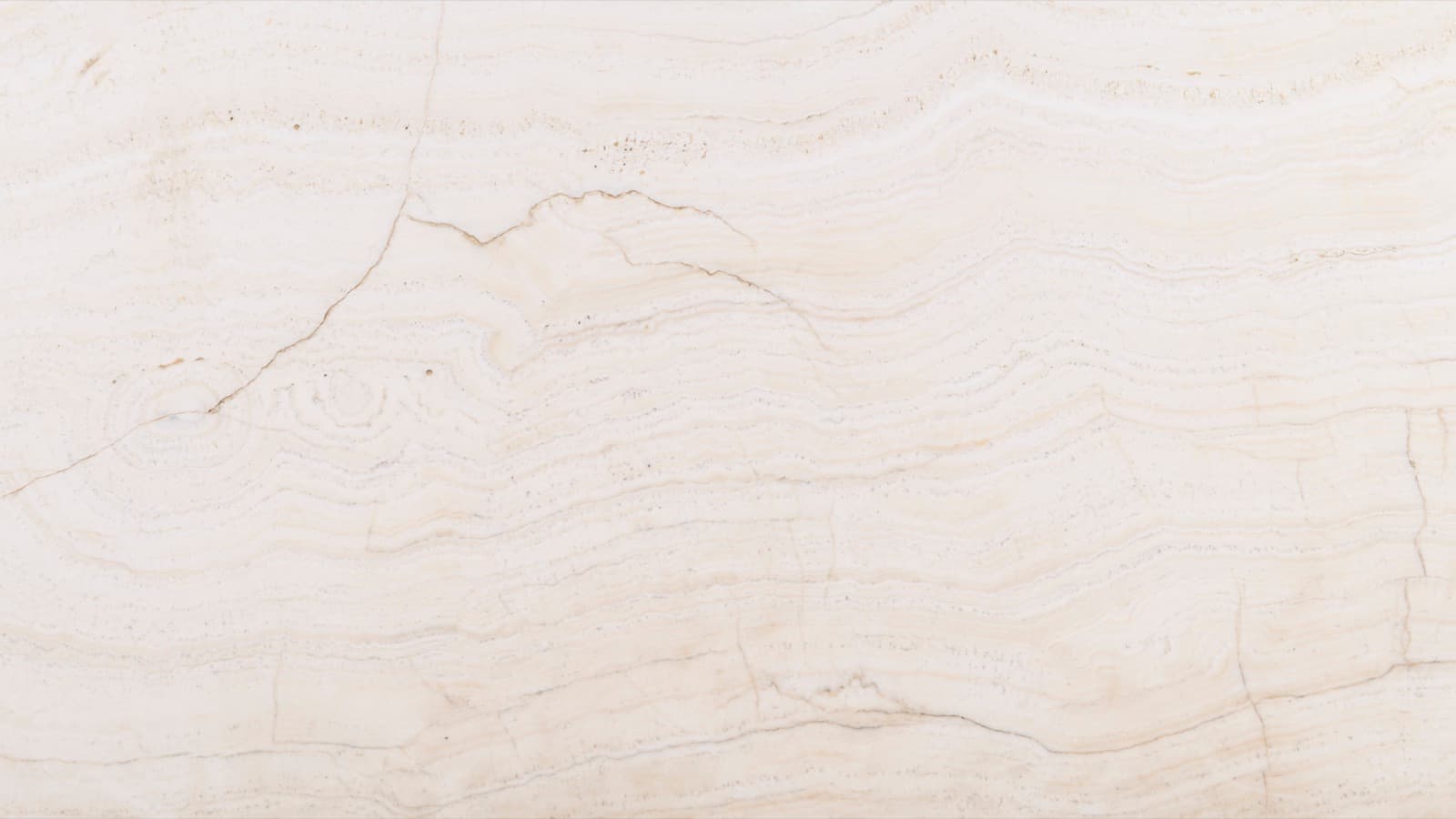
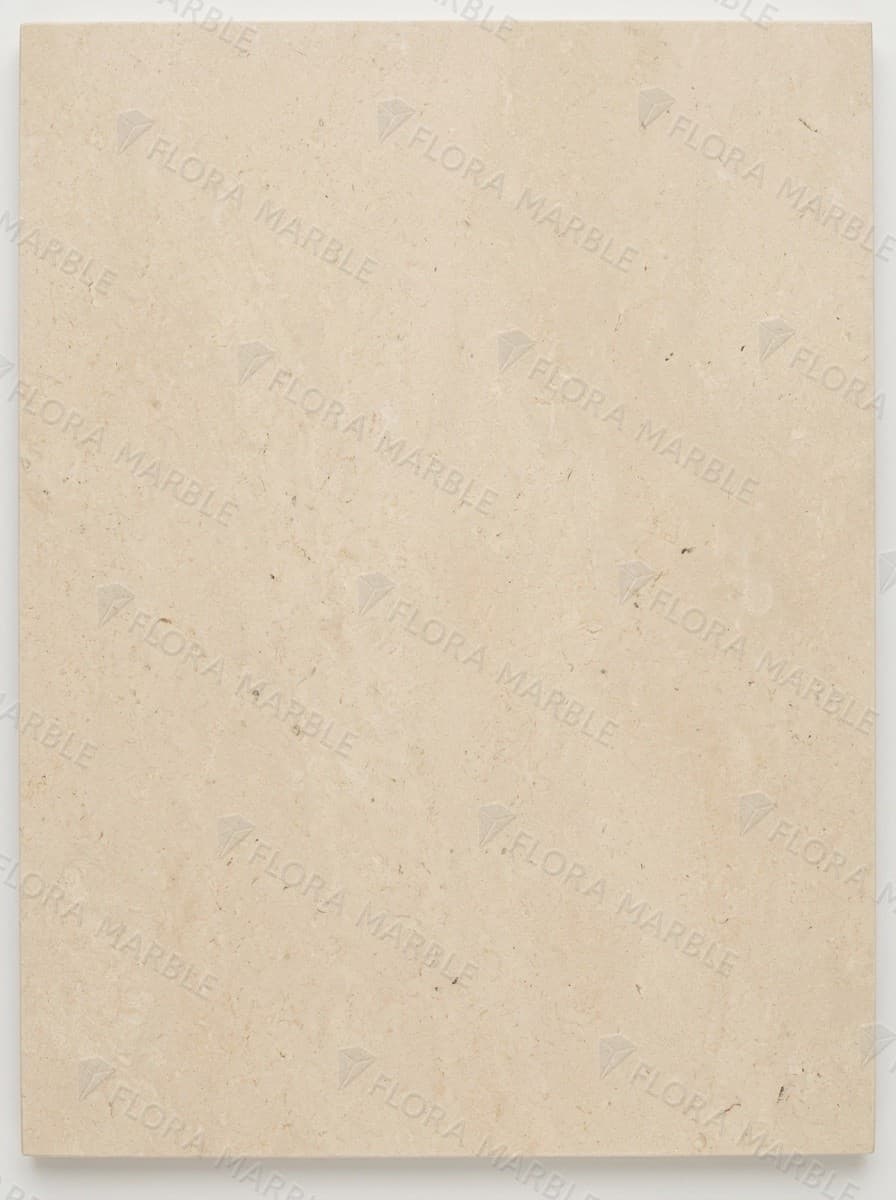
Arabescato Corchia comes from the Monte Corchia quarries in the Apuan Alps. It is the option for people who want an Italian marble that has not already appeared in every other apartment on the floor.
Its character varies more than Carrara's from selection to selection, which is precisely the appeal: colour and veining give an interior a signature rather than a stock look. It suits:
- Feature walls and decorative applications
- Bathrooms and luxury residential interiors
- Hospitality spaces where individuality matters
- Flooring, where a lot with consistent character is available
Because it varies, Corchia is the strongest argument in this article for seeing the actual lot before committing.
Carrara vs Calacatta vs Corchia at a glance
- Overall look
- Carrara: classic and understated · Calacatta: bold and luxurious · Corchia: distinctive and characterful
- Background
- Carrara: white to grey · Calacatta: bright warm white · Corchia: varies by selection
- Veining
- Carrara: soft and fine · Calacatta: thick and dramatic · Corchia: expressive and natural
- Best for
- Carrara: versatile whole-room use · Calacatta: one statement surface · Corchia: bespoke interiors
- Care
- All three are marble: seal, wipe spills, avoid acids
Marble is a natural product and slabs of the same name can differ considerably. Wherever you can, judge the slab rather than the description.
Other Italian marbles worth considering
Beyond the three above, Statuario Venato offers a refined light background with sharp veining that suits high-end interiors. Botticino Classico brings warm, even colour to more traditional schemes. Arabescato is known for expressive veining across walls and floors, and Breccia Aurora makes a striking impression through its fragmented pattern and warm tone.
The whole range is in our Italian Collection.
How to choose for your own space
Start with the room, not the name of the stone.
Match it to your design
Soft veining suits restrained interiors. A dramatic stone suits a scheme built around one focal surface. Decide first whether the marble is the subject or the setting.
Think about the application
Floors, walls, counters, vanities and staircases each ask different things of a stone. A hard-working floor has little in common with a decorative wall panel, even in the same house.
Read the veining across the whole lot
Do not judge on colour alone. Look at how veins run through the slab and whether the pattern continues across the slabs you will actually receive. On large surfaces that continuity is what separates a good installation from an obvious one.
Be honest about maintenance
Italian marble needs sealing where recommended, prompt attention to spills and pH-neutral cleaning. It is sensitive to acids: lemon, vinegar and many bathroom cleaners will etch it. Our care guide sets out a routine that takes minutes a week.
Set a realistic budget
Price moves with variety, grade, slab size, thickness, finish, sourcing and installation. Compare the finished project, not the rate per slab.
Caring for Italian marble
- Dust and dry-clean the surface regularly
- Use cleaners made for natural stone
- Wipe spills at once, especially anything acidic
- Seal on the schedule recommended for your stone
- Avoid acidic and abrasive products entirely
- Protect surfaces that take heavy daily use
Done consistently, this keeps both the appearance and the value of the work.
Choosing your marble with Flora Marble
Picking marble is more than picking a colour from a book. Slab quality, consistency across a lot, how the stone will be used and how it sits with everything else in the room all decide whether it works.
At Flora Marble we carry a curated range for residential, hospitality and commercial interiors, selected at the quarry and finished at our own factory in Silvassa. Whether it is the quiet elegance of Carrara, the drama of Calacatta or the individuality of Corchia, we can help you find the lot that suits the project.
Browse the gallery or come and see the slabs at our Vile Parle gallery in Mumbai.
Which Italian marble is right for you?
There is no single best Italian marble, only the one that fits the project.
- Carrara for versatility and quiet elegance
- Calacatta for bold veining and a luxurious statement
- Corchia for natural character and a bespoke interior
Whether it is a family home, a kitchen rebuild or a hotel, the right Italian marble changes the whole room.
See it in person
Reading about stone is one thing — standing in front of it is another.
Flora Marble is an Italian and imported marble supplier in Mumbai — our stocked slabs stand in the Mumbai gallery ready to compare side by side, and catalogue stones are sourced to order from the quarry and finished at our own factory. Visit, and our family will help you choose.
Frequently asked
- What is the best Italian marble for flooring?
- There is no single best. Carrara suits floors that should read as one calm surface across many slabs. Calacatta is usually kept for a statement area rather than a whole floor. Corchia works where individuality matters and a consistent lot is available.
- Which is more expensive, Carrara or Calacatta marble?
- Calacatta is generally positioned as the more premium of the two, but price depends on grade, slab quality, rarity, size and sourcing. Judge the individual slab rather than the variety name.
- Is Italian marble suitable for Indian homes?
- Yes, when the variety, application, installation and maintenance are matched to the room. Climate, daily use, exposure to staining and the quality of installation all matter more than the country of origin.
- What is the difference between Carrara and Calacatta marble?
- Carrara has a white-to-grey background with softer grey veining, giving a subtle and versatile look. Calacatta has a brighter, warmer background with thicker, more dramatic veining, which is why it is chosen for statement surfaces.
- Is Corchia marble a good choice for luxury interiors?
- It can be, where individuality and natural character are the point. Its appearance varies by selection, so viewing the actual lot is particularly valuable before deciding.
- How do I maintain Italian marble?
- Clean gently with pH-neutral products made for stone, wipe spills immediately, never use acidic or abrasive cleaners, and seal on the schedule recommended for your stone.
- How do I choose the right Italian marble slab?
- Consider the application, colour, veining, slab size, finish, maintenance and budget together. Above all, see the actual slab where you can, because natural stone varies within a single variety.
Stones in this story
Keep reading
Buying guides
10 Best Granite and Marble Kitchen Slabs to Elevate Your Interiors
Ten granite and marble slabs for kitchen countertops and islands, how to choose between them for colour, durability and upkeep, and what to check before you buy.
Guides
Stone for Feature & Statement Walls
A single wall of natural stone can carry a whole room. How to choose stone for a feature wall — which stones, which finish, backlighting and book-matching — for maximum effect.