
Stone 101 · 4 min read
What Is Calacatta Marble? A Buyer's Guide
By Flora Marble team · 20 May 2026 · Updated 23 July 2026
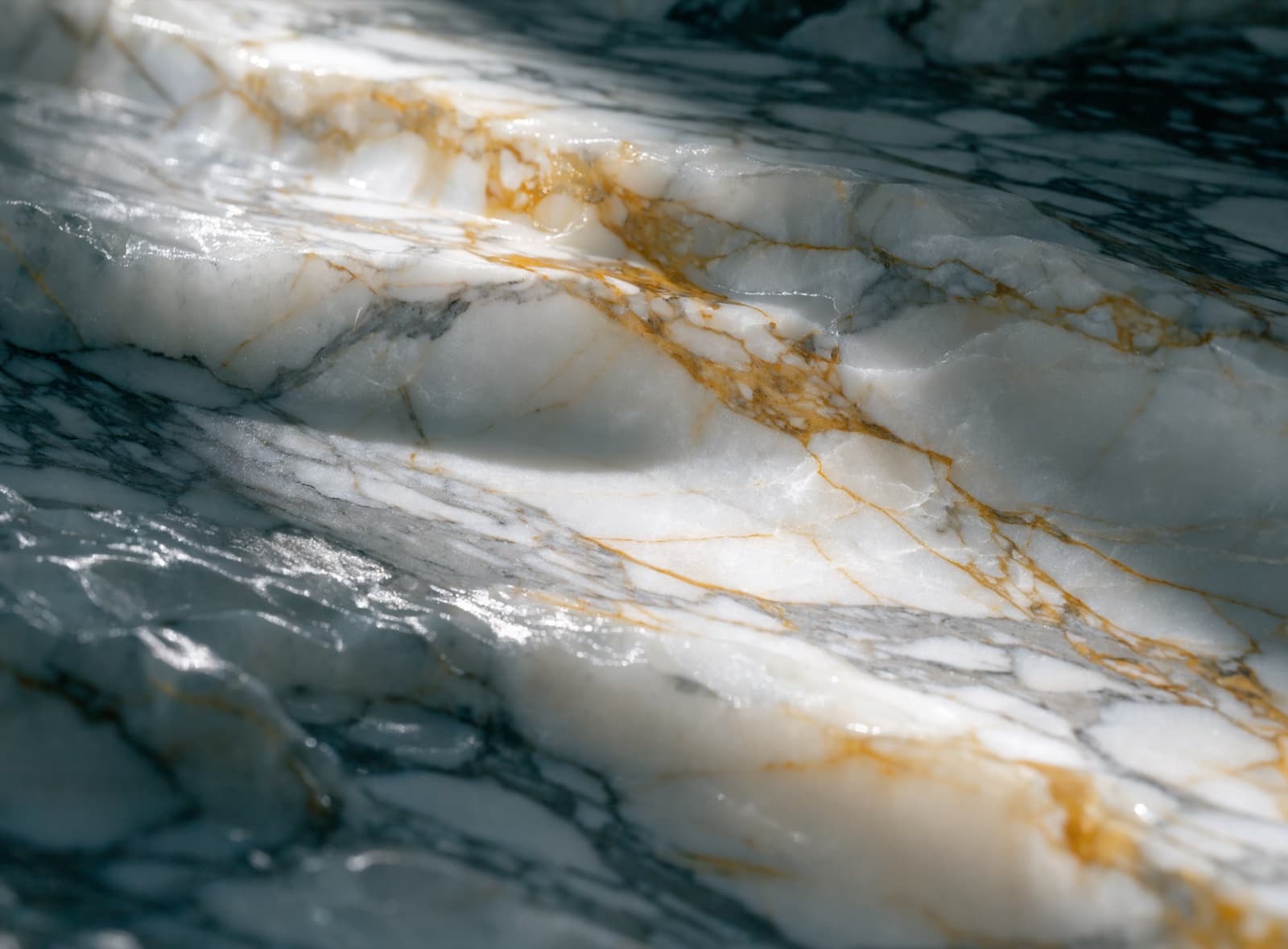
What is Calacatta marble?
Calacatta is a white marble quarried in the Apuan mountains above Carrara, in Tuscany, Italy. Like all marble it is metamorphosed limestone — almost pure calcium carbonate — but Calacatta is distinguished by a bright, often warm-white background crossed by bold, well-defined veins in grey, gold or taupe. It is comparatively rare, which is part of why it sits at the top of the white-marble hierarchy.
Calacatta vs. Carrara vs. Statuario
These three names come from the same corner of Italy and are often confused. The difference is in the background colour and the character of the veining.
- Carrara
- Soft grey-white background with fine, feathery, blue-grey veining. The most abundant and the most understated.
- Statuario
- Bright white with sharp, decisive grey veining. Prized historically for sculpture.
- Calacatta
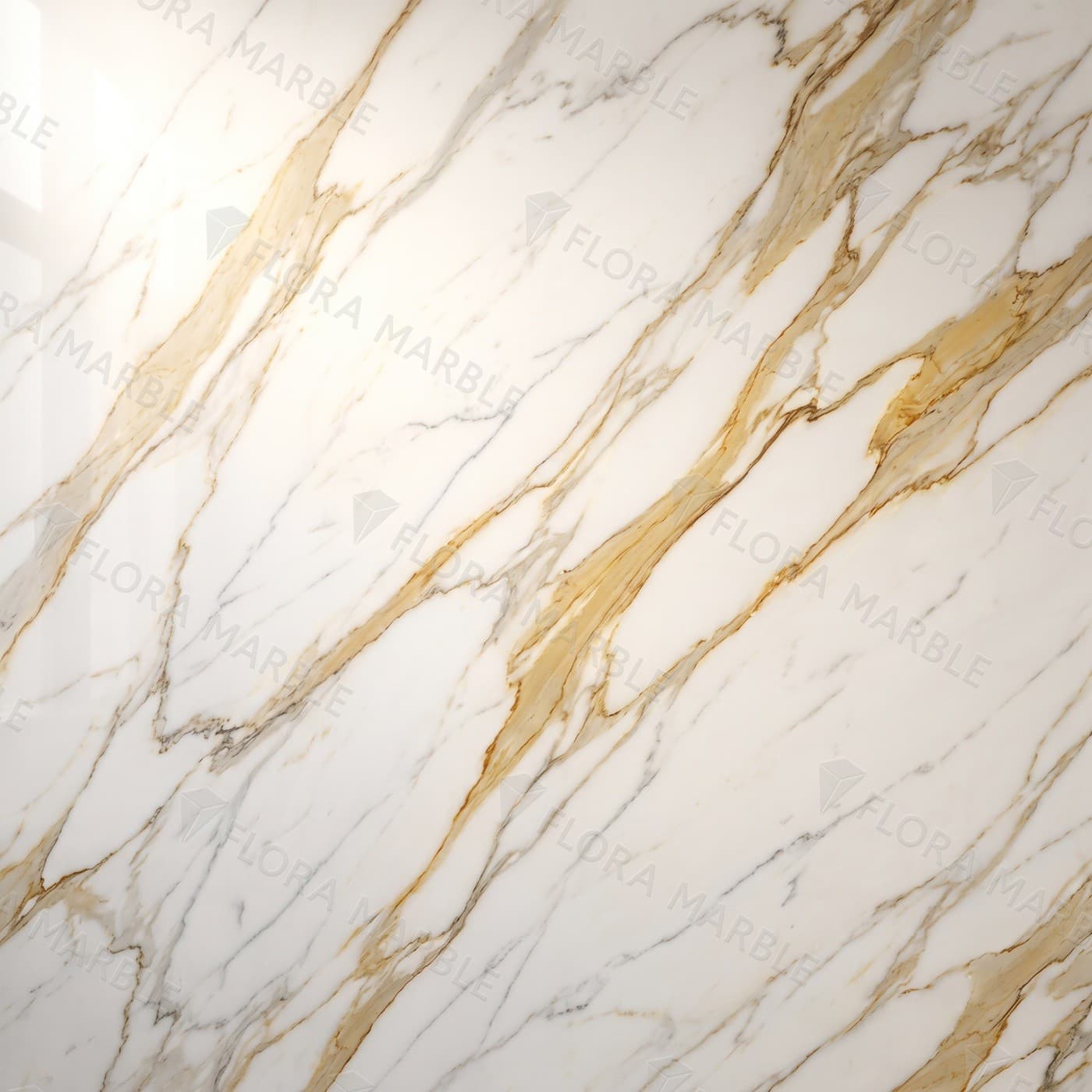
- The whitest, warmest background with the boldest, most dramatic veins — often gold or thick grey. The rarest of the three.
As a rule of thumb: Carrara reads calm and grey, Statuario reads crisp and white, and Calacatta reads dramatic. No two slabs are identical, so the right choice is always the specific block in front of you.
Where Calacatta works best
- Statement kitchen islands and countertops
- Bathroom vanities and full-height shower walls
- Fireplace surrounds and feature walls
- Book-matched slabs, where two halves mirror each other for symmetry
Because the veining is so expressive, Calacatta is usually chosen where it can be seen — a single island, a vanity, a wall — rather than spread thinly across an entire room.
Is Calacatta marble practical?
Calacatta is marble, so it behaves like marble: it is softer than granite or quartzite and will etch if it meets acid (lemon, wine, vinegar), and it can scratch. Many owners embrace the way marble develops a lived-in patina; others choose a honed finish, which hides etching better than a polish. With periodic sealing and pH-neutral cleaning it performs beautifully for decades.
See it in person
Reading about stone is one thing — standing in front of it is another.
Flora Marble is an Italian and imported marble supplier in Mumbai — our stocked slabs stand in the Mumbai gallery ready to compare side by side, and catalogue stones are sourced to order from the quarry and finished at our own factory. Visit, and our family will help you choose.
Frequently asked
- Is Calacatta marble more expensive than Carrara?
- Generally yes. Calacatta is rarer and more dramatically veined than Carrara, which makes it more sought-after and typically more expensive. The exact price always depends on the individual block, its size and its veining.
- What is the difference between Calacatta and Carrara marble?
- Carrara has a soft grey-white background with fine, feathery veining, while Calacatta has a whiter, warmer background with bolder, more defined veins — often gold or thick grey. Calacatta is the rarer and more dramatic of the two.
- Does Calacatta marble stain or etch?
- Calacatta is a calcium-carbonate marble, so acids such as lemon, wine and vinegar can etch its surface, and it can stain if spills are left to sit. Sealing the stone and wiping spills promptly keeps it looking its best; a honed finish hides etching better than a polished one.
Stones in this story
Keep reading
Stone 101
Top 3 Best Italian Marble Varieties: Carrara, Calacatta and Corchia Compared
Carrara, Calacatta and Corchia compared: how each one looks, where it works best, and how to choose between them for floors, islands and feature walls.
Buying guides
10 Best Granite and Marble Kitchen Slabs to Elevate Your Interiors
Ten granite and marble slabs for kitchen countertops and islands, how to choose between them for colour, durability and upkeep, and what to check before you buy.