
Stone 101 · 4 min read
Onyx: The Art of Backlit Stone
By Flora Marble team · 12 June 2026 · Updated 23 July 2026
What is onyx?
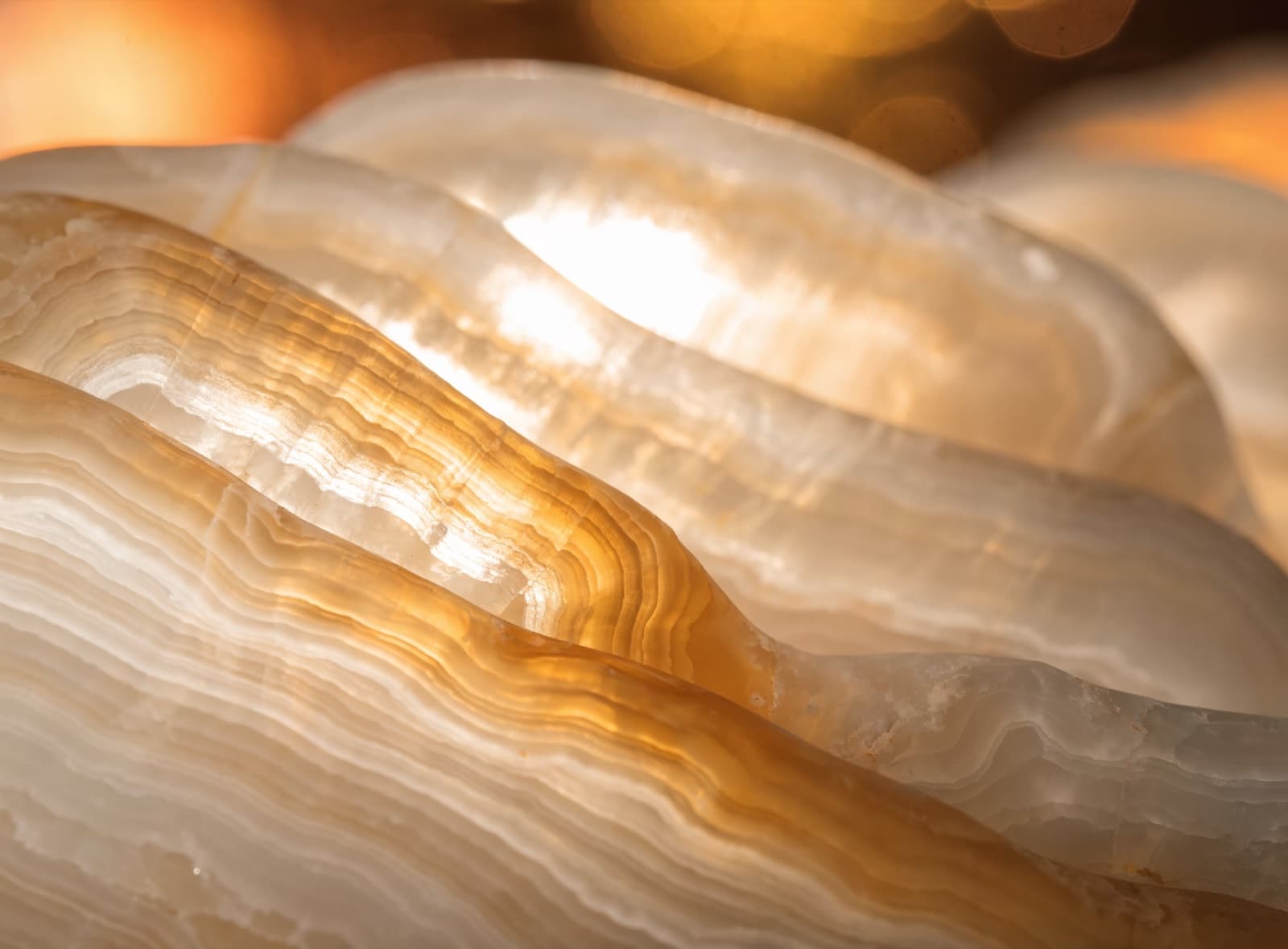
Onyx is a banded, translucent stone formed from mineral-rich water — the same slow process that builds stalactites in caves. Its defining quality is translucency: light passes through it. The colours, in warm honey, amber, green and white, arrive in dramatic, river-like bands.
Why is onyx backlit?
Because light travels through it, onyx is frequently lit from behind so the stone appears to glow from within, revealing every band and ripple. A backlit onyx panel becomes a piece of architecture in its own right.
- Reception desks and bar fronts
- Feature walls and headboards
- Vanity tops and splashbacks
- Freestanding screens and partitions
Living with onyx
Onyx is softer and more delicate than marble, so it is best used where it is admired rather than worked hard — a feature wall rather than a chopping surface. Sealed and treated with care, it rewards you with a quality no other material has: light.
See it in person
Reading about stone is one thing — standing in front of it is another.
Flora Marble is an Italian and imported marble supplier in Mumbai — our stocked slabs stand in the Mumbai gallery ready to compare side by side, and catalogue stones are sourced to order from the quarry and finished at our own factory. Visit, and our family will help you choose.
Frequently asked
- Why is onyx backlit?
- Onyx is translucent, so lighting it from behind lets light pass through the stone and makes it appear to glow, revealing its bands and colour. This is why onyx is popular for feature walls, bars and reception desks.
- Is onyx durable enough for a kitchen countertop?
- Onyx is softer and more delicate than marble or quartzite, so it is generally not recommended for hard-working kitchen countertops. It is best used for feature walls, vanities, bar fronts and other surfaces that are admired more than worked.
- What colours does onyx come in?
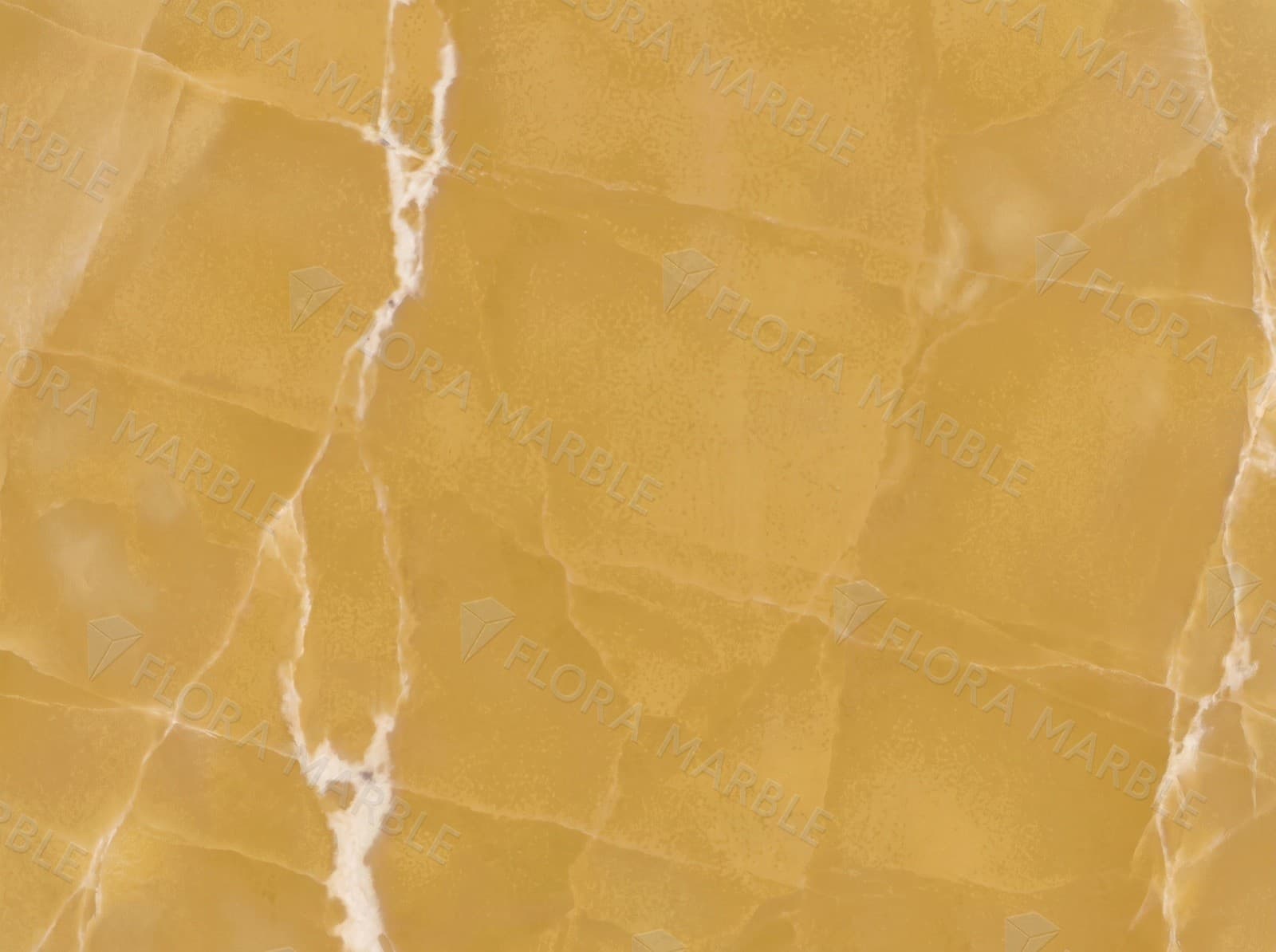
- Onyx commonly comes in warm honey and amber tones, as well as green, white and grey, usually in dramatic banded patterns. Because it is natural, every slab is unique.
Stones in this story
Keep reading
Stone 101
Top 3 Best Italian Marble Varieties: Carrara, Calacatta and Corchia Compared
Carrara, Calacatta and Corchia compared: how each one looks, where it works best, and how to choose between them for floors, islands and feature walls.
Buying guides
10 Best Granite and Marble Kitchen Slabs to Elevate Your Interiors
Ten granite and marble slabs for kitchen countertops and islands, how to choose between them for colour, durability and upkeep, and what to check before you buy.