
Stone 101 · 4 min read
A Guide to Travertine
By Flora Marble team · 11 June 2026 · Updated 23 July 2026
What is travertine?
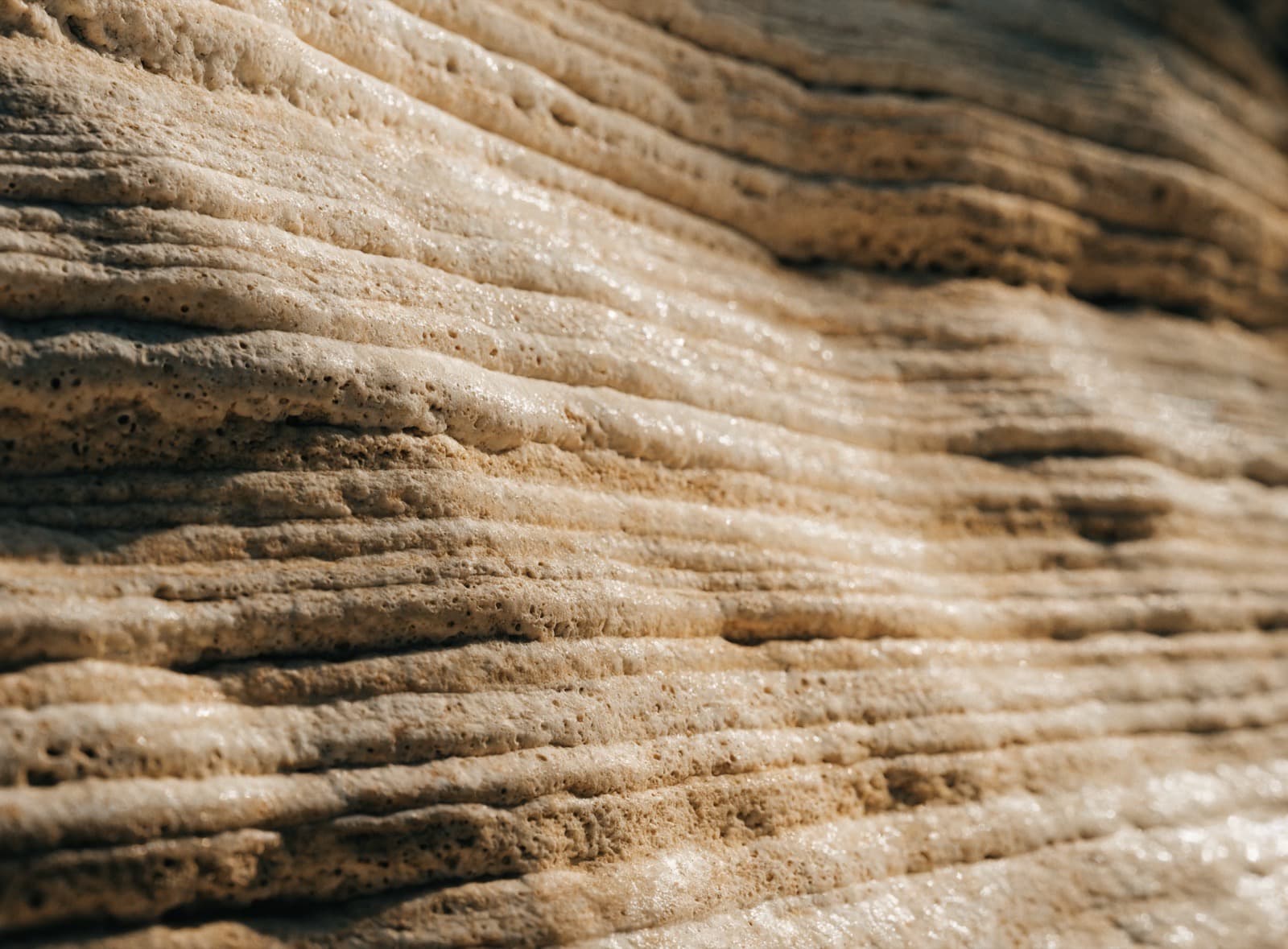
Travertine is a form of limestone deposited by mineral springs. It sits a step before marble in the same family — limestone that hasn't fully metamorphosed — and is defined by its warm, earthy tones and the natural surface pits left by escaping gases. The Romans built with it; the Colosseum is travertine.
Filled or unfilled
Travertine's natural holes can be left open for a rustic, textured look (unfilled), or filled and honed for a smooth, contemporary surface. Both are sealed; the choice is purely aesthetic.
Finishes and colours
- Honed
- A smooth matte surface — the most popular, contemporary look.
- Tumbled
- Softened, antiqued edges and surface — rustic and tactile.
- Polished
- A gentle sheen that deepens the colour.
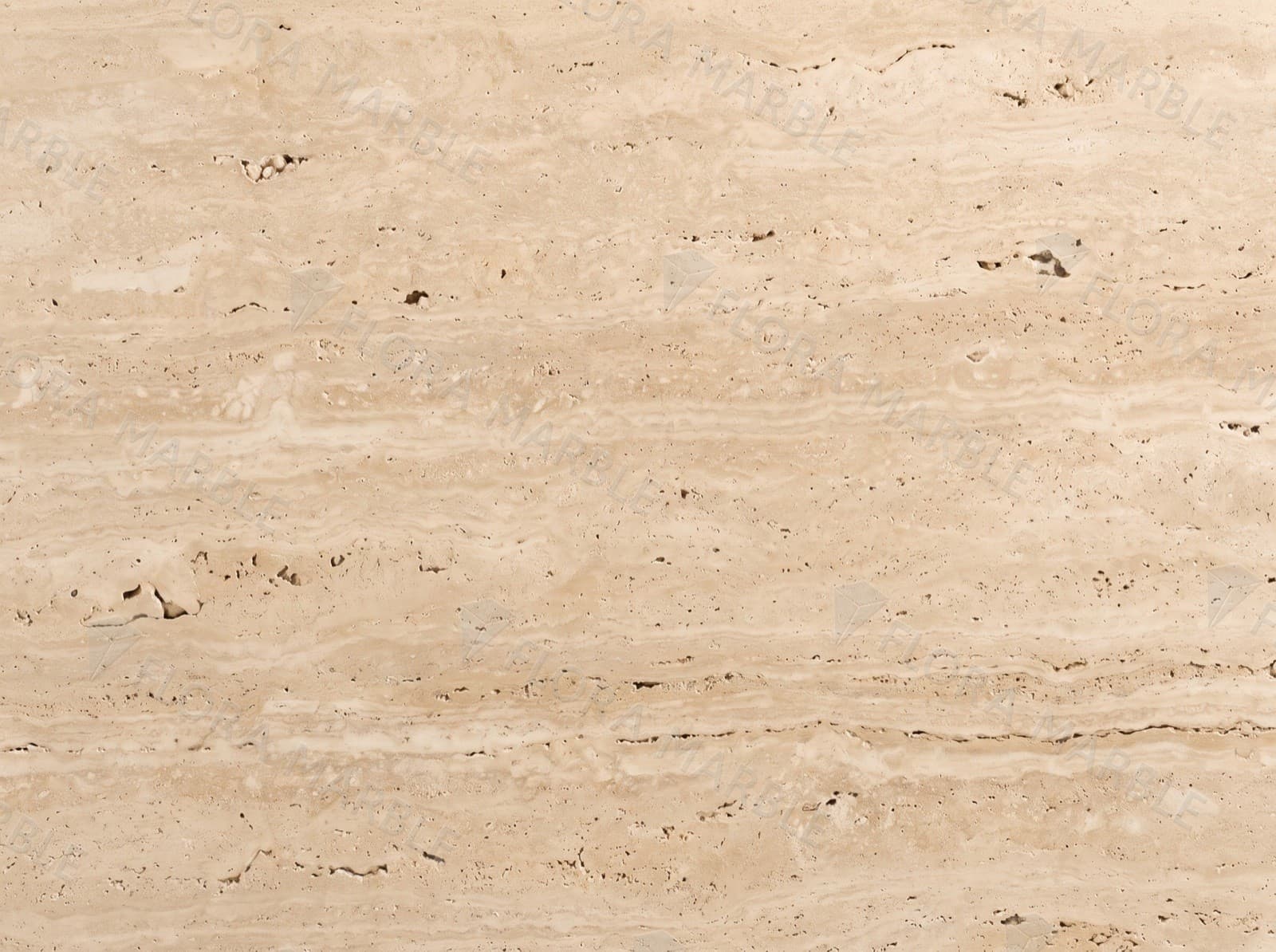
Colours run from classic warm beige and walnut to cooler silver and grey.
Where travertine works
- Flooring, indoors and out
- Feature and facade walls
- Pool surrounds and patios — textured finishes are naturally slip-resistant
- Bathrooms and vanities
Flora Marble stocks classic and silver travertine — see them in the gallery.
See it in person
Reading about stone is one thing — standing in front of it is another.
Flora Marble is an Italian and imported marble supplier in Mumbai — our stocked slabs stand in the Mumbai gallery ready to compare side by side, and catalogue stones are sourced to order from the quarry and finished at our own factory. Visit, and our family will help you choose.
Frequently asked
- Is travertine the same as marble?
- Not quite. Both are calcium-carbonate stones, but travertine is a limestone deposited by mineral springs and has characteristic natural pits, while marble is fully metamorphosed and more crystalline. Travertine reads warmer and more textured.
- Is travertine good for outdoors?
- Yes. Travertine is widely used outdoors — for pool surrounds, patios and facades — because textured finishes are naturally slip-resistant and it weathers well. It should still be sealed.
- Does travertine need sealing?
- Yes. Like marble, travertine is a calcium-carbonate stone that benefits from sealing to resist staining and etching, with periodic resealing depending on use.
Stones in this story
Keep reading
Stone 101
Top 3 Best Italian Marble Varieties: Carrara, Calacatta and Corchia Compared
Carrara, Calacatta and Corchia compared: how each one looks, where it works best, and how to choose between them for floors, islands and feature walls.
Buying guides
10 Best Granite and Marble Kitchen Slabs to Elevate Your Interiors
Ten granite and marble slabs for kitchen countertops and islands, how to choose between them for colour, durability and upkeep, and what to check before you buy.